Shop By Category
00 items


This electro-proportional, direct-acting reducer/reliever valve reduces a high primary pressure at the inlet (port 2) to a constant reduced pressure at port 1, with a full flow relief function from port 1 to tank (port 3). The valve is biased to the relieving mode. Energizing the coil connects port 2 to port 1. Increasing the current to the coil will proportionally increase the reduced pressure at port 1. If pressure at port 1 exceeds the setting induced by the coil, pressure at port 1 is relieved to port 3. This valve is open in the transition from reducing to relieving. It provides good pressure control and dynamic response. Optional full manual control is available.


Fast-acting, pilot-operated, balanced piston relief cartridges are normally closed, pressure-limiting valves used to protect hydraulics components from pressure transients. Fast opening and closing is gained at the expense of smoothness. When the pressure at the inlet (port 1) reaches the valve setting, the valve starts to open to tank (port 2), throttling flow to limit the pressure rise. These valves have low pressure rise vs. flow and are very fast.
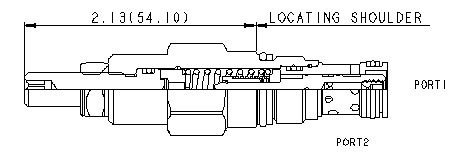
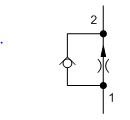
Fixed-orifice, pressure-compensated flow controls with reverse-flow check provide precise flow regulation for meter-in or meter-out applications where there may be wide pressure fluctuations. An integral high-capacity check valve provides unrestricted flow from port 2 to port 1. The flow setting is specified by the user and is set at the factory.
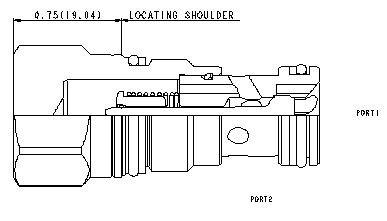

This valve is a fixed-orifice, non-pressure-compensated flow control with a reverse flow check. The flow setting is specified by the user and is set at the factory.
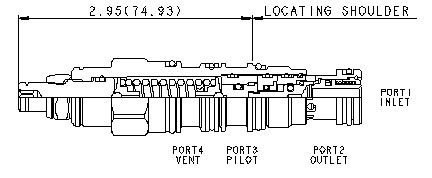

Vented counterbalance valves with pilot assist are meant to control an overrunning load. The check valve allows free flow from the directional valve (port 2) to the load (port 1) while a direct-acting, pilot-assisted relief valve controls flow from port 1 to port 2. Pilot assist at port 3 lowers the effective setting of the relief valve at a rate determined by the pilot ratio. Backpressure at port 2 does not affect the valve setting because the spring chamber references the vent (port 4). Other names for this valve include motion control valve and over-center valve.
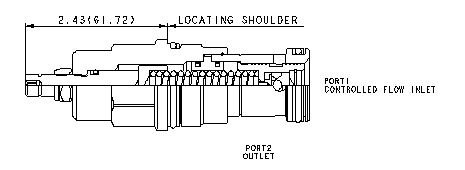

Fixed-orifice, pressure-compensated flow controls provide precise flow regulation for meter-in or meter-out applications where there may be wide pressure fluctuations. The flow setting is specified by the user and is set at the factory.


This valve is a pilot to open check valve. It has a sealed pilot, a steel seat, and is non-vented. It allows free flow from the valve (port 2) to the load (port 1) and blocks flow in the opposite direction. Pressure at the pilot (port 3) will open the valve from port 1 to port 2. Pilot pressure needed at port 3 to open the valve is directly proportional to the load pressure at port 1. Pressure at port 2 directly opposes pilot pressure.
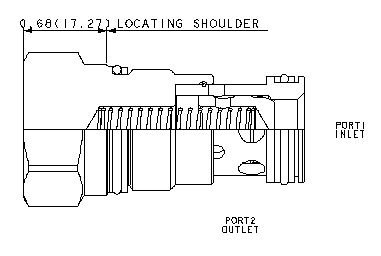

Free-flow, nose-to-side check valves are on/off circuit components that allow free flow from the inlet (port 1) to the outlet (port 2) and block flow in the opposite direction.
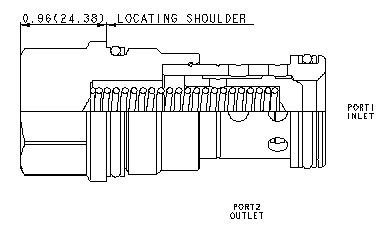

Free-flow, nose-to-side check valves are on/off circuit components that allow free flow from the inlet (port 1) to the outlet (port 2) and block flow in the opposite direction.
