A pump that looks fine on paper can still create heat, noise, or early failures once it is installed. The difference usually comes down to how the pump handles pressure and contamination over time. Gear pumps and radial piston pumps both move oil, yet they respond very differently once the system starts working hard.
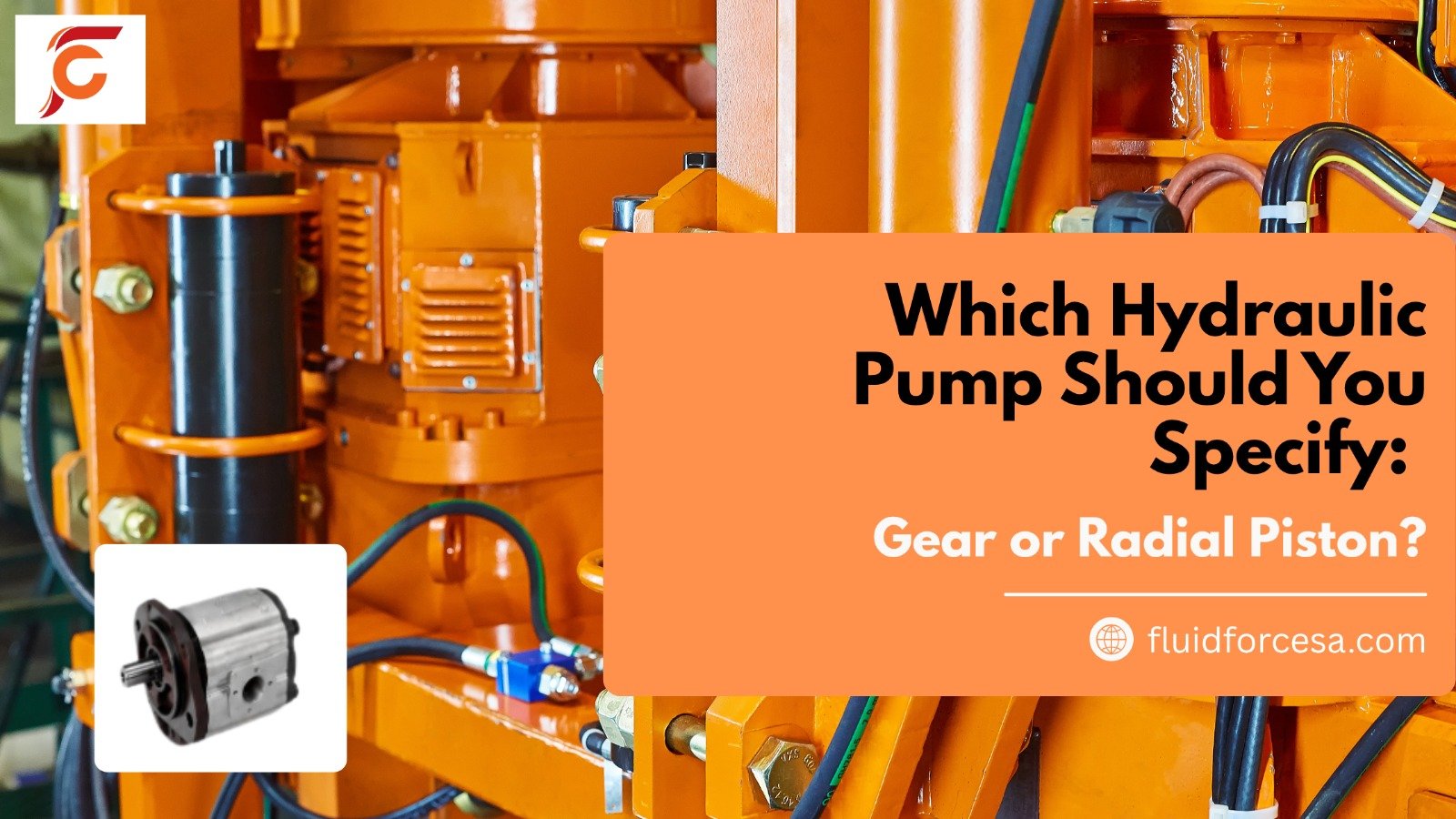
For many auxiliary and medium-pressure circuits, aneaton hydraulic gear pump remains a practical and economical choice. In circuits that stay under high pressure for long periods, a polyhydron radial piston pump often delivers better efficiency and longer service life.
Quick Comparison at a Glance
Aspect
Gear Pump
Radial Piston Pump
Continuous pressure range
Typically up to 210–276 bar
Typically 350–550 bar
Efficiency under high load
Declines as pressure rises
Stays relatively high
Sensitivity to dirty oil
Lower
Higher
Flow smoothness
Moderate pulsation
Lower pulsation
Typical first cost
Lower
Higher
Preferred duty
Intermittent or moderate pressure
Continuous high-pressure work
The table shows the main trade-offs. The rest of the decision depends on how the machine actually runs day after day.
How the Two Designs Behave Once Pressure Rises
Gear pumps move oil by trapping it between meshing teeth. The design is simple and compact. At moderate pressures the internal leakage stays manageable. As pressure climbs, more oil slips past the gear tips and side plates. That leakage turns into heat and reduces volumetric efficiency.
Radial piston pumps use pistons arranged around a central cam. Each piston draws oil in and forces it out under higher pressure with tighter sealing. Internal leakage stays lower even when the system runs hard, so less energy is wasted as heat. The design, however, expects cleaner oil and consistent viscosity to keep the close-fitting parts working properly.
When a Gear Pump Is the Smarter Choice
Choose a gear pump when:
Continuous system pressure stays comfortably below 200–250 bar
The circuit runs intermittently or for short duty cycles
Oil cleanliness is difficult to control tightly
Budget and simplicity matter more than peak efficiency
The pump feeds steering, cooling fans, auxiliary functions, or open-center systems
These conditions match many agricultural machines, material-handling equipment, and secondary circuits on larger machines.
When a Radial Piston Pump Makes More Sense
A radial piston design usually pays off when:
The system must hold high continuous pressure for long periods
Heat generation needs to stay low
Energy efficiency under load affects operating cost
The installation can maintain good filtration
Submerged or above-tank mounting is preferred
Typical applications include industrial presses, high-force clamping circuits, test stands, and mobile equipment that works under sustained high load.
A Simple Decision Checklist
What is the continuous operating pressure?
How many hours per day will the pump run at that pressure?
How clean is the oil likely to stay in service?
Is heat rejection already a problem on the machine?
Does the budget allow a higher initial investment for longer life?
Answering these five questions usually points clearly toward one technology or the other.
Field Issues That Appear Later
Gear pumps that are pushed beyond their continuous pressure rating often show rising case temperature, increased noise, and gradual loss of flow. Radial piston pumps that receive dirty oil or incorrect viscosity can suffer from accelerated wear of the pistons or valves. In both cases, monitoring temperature and listening for changes in sound gives early warning before complete failure.
Proper filtration and regular oil analysis remain the cheapest insurance for either design.
FAQs
Can I replace a radial piston pump with a gear pump to save money?
Only if the continuous pressure and duty cycle fall inside the gear pump’s rating. Otherwise the cheaper unit will wear out faster and generate more heat.
Does a radial piston pump always last longer?
It lasts longer under high continuous pressure and good filtration. In dirty or moderate-pressure conditions a gear pump can be more durable simply because it is more tolerant of contamination.
Is flow adjustable on these pumps?
Both are fixed-displacement. Output changes only with shaft speed. Variable flow requires a different pump type or external controls.
Which design is quieter?
Radial piston pumps generally produce less flow pulsation and lower noise at high pressure. Gear pumps are louder once pressure rises.
Closing Takeaway
The best pump is the one that matches the real pressure, duty cycle, and oil condition of the machine, not the one that simply looks more advanced on a catalogue page. Moderate-pressure and simpler circuits continue to run reliably with an eaton hydraulic gear pump. Continuous high-pressure work benefits from the efficiency and sealing of apolyhydron radial piston pump. Matching the technology to the actual operating conditions remains the most reliable way to keep downtime low and performance consistent.
Author Bio: Fluid Force Team Fluid Force supplies hydraulic components including power units, manifold blocks, and related solutions for industrial and mobile equipment, supporting reliable system performance and reduced downtime.
In today’s industrial hydraulic systems, pressure control is no longer just about protection, it’s about efficiency, flexibility and remote operation. A...
Dowty hydraulic pumps are external gear pumps that powered a wide range of agricultural, construction, mobile, and industrial equipment for decades. Although...
Hydraulic systems depend on precise pressure control and reliable flow direction to keep industrial operations running safely and efficiently. Two components that...