A hydraulic machine rarely fails because of one dramatic problem.
More often, performance starts slipping gradually. A cylinder becomes slower than usual. A machine begins generating excessive heat. Movement becomes less precise. Pressure fluctuates. Components wear faster than expected.
And sometimes, the problem comes down to something that seems relatively small: the valve controlling the hydraulic circuit.
Valves are responsible for controlling some of the most important aspects of a hydraulic system where fluid travels, how actuators move, and how pressure is managed.
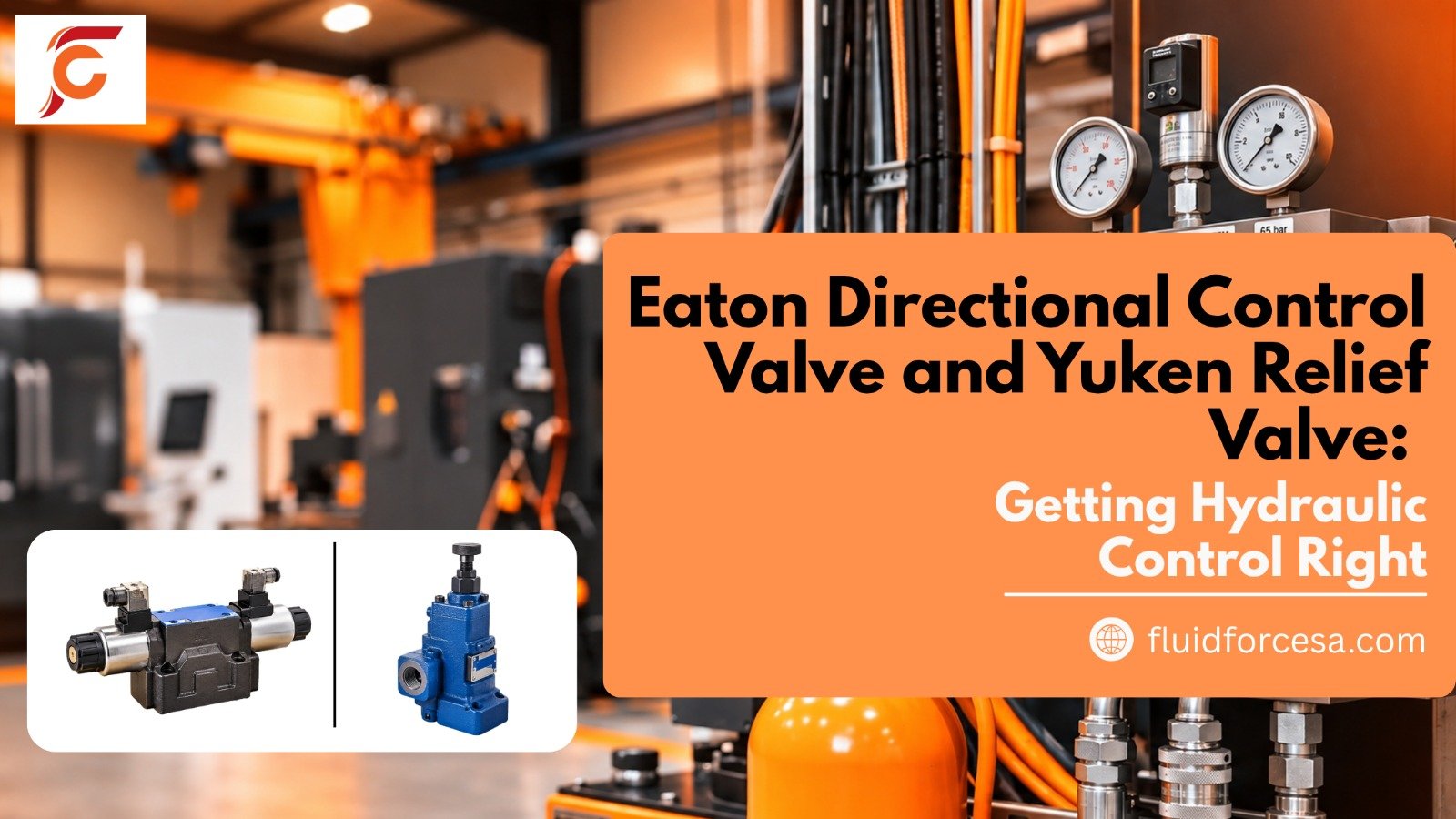
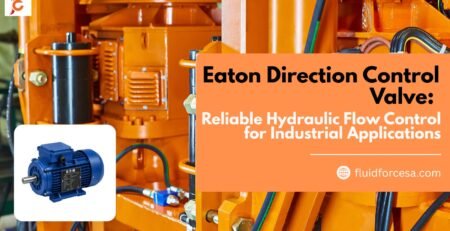
Among the many options available for industrial hydraulic applications, theEaton directional control valve and Yuken relief valve serve two particularly important functions. The first controls the path of hydraulic fluid, while the second helps manage excessive pressure within the circuit.
Understanding these roles isn’t just useful for engineers. It can help maintenance teams, machine manufacturers, and procurement professionals make better decisions when selecting or replacing hydraulic components.
The Hydraulic System Is Only as Good as Its Control
A pump may generate the hydraulic power, but power alone doesn’t make a machine move correctly.
Imagine a hydraulic cylinder on an industrial machine.
The pump supplies pressurized fluid. But the cylinder still needs instructions.
Should it extend?
Should it retract?
Should it stop?
Should the fluid return to the reservoir?
Those decisions are handled by hydraulic valves.
At the same time, the system needs to operate within an appropriate pressure range. If pressure rises beyond the intended level, other components can be placed under unnecessary stress.
That is why hydraulic control is really about two connected questions:
Where should the fluid go?
How should the pressure be controlled?
This is where directional and relief valves enter the picture.
Eaton Directional Control Valve: Controlling the Movement
A directional control valve does exactly what its name suggests, it controls the direction in which hydraulic fluid moves through the circuit.
When the valve changes position, it changes the connections between its ports. This determines where pressurized oil flows and, consequently, how the hydraulic actuator responds.
In practical terms, this can mean controlling:
Cylinder extension
Cylinder retraction
Motor rotation
Stopping and holding functions
Flow paths between the pump, actuator, and tank
Fluid Force’s catalogue includes a substantial selection of Eaton directional-control valves, including direct-acting and pilot-operated configurations.
That variety matters because hydraulic applications don’t all require the same type of directional control.
Why One Directional Valve Isn’t Suitable for Every Machine
A common mistake is to think that hydraulic valves are interchangeable as long as the basic function appears similar.
They’re not.
A directional valve needs to match the hydraulic circuit in several ways.
Flow Capacity
The valve must accommodate the amount of hydraulic fluid the system needs.
If the required flow exceeds what the valve can handle, restrictions and pressure losses can affect machine performance.
Fluid Force lists Eaton DG5V-8 pilot-operated directional valves with capacities reaching up to 700 L/min and rated pressure up to 350 bar for certain configurations.
That kind of capacity is very different from what would be required for a smaller hydraulic circuit.
Pressure Rating
Pressure is equally important.
A valve must be rated appropriately for the hydraulic system in which it is installed.
For example, one Eaton DG5S4-04 pilot-operated model listed by Fluid Force has a maximum flow of 227 L/min and a maximum pressure of 210 bar.
The lesson is straightforward:
Never select a valve based on its brand name alone.
The model specifications have to match the machine.
Spool Configuration
The internal spool arrangement determines what happens when the valve is in different positions.
This affects whether the actuator moves, stops, holds, or returns.
Choosing the correct spool configuration is therefore a circuit-design decision—not simply a purchasing decision.
Actuation
Directional valves can be actuated through different methods.
Solenoid operation is particularly useful in automated machinery because the valve can be controlled electrically as part of a larger machine-control system.
For larger hydraulic circuits, pilot-operated configurations can provide the required control of high flow rates.
Yuken Relief Valve: The Pressure Guardian
Now consider the other side of the equation.
A hydraulic system needs movement, but it also needs pressure control.
This is where a Yuken relief valve can become an important part of the circuit.
A relief valve is designed to limit pressure by providing a controlled path for hydraulic fluid when the pressure reaches its set value.
In simple terms:
If pressure rises too high, the relief valve provides a way to control it.
This helps protect components such as:
Pumps
Cylinders
Hydraulic motors
Hoses
Pipes
Manifolds
Other valves
Fluid Force currently lists Yuken among its relief-valve brands, with multiple Yuken relief-valve options within its hydraulic-valve catalogue.
Why Pressure Control Is a Bigger Deal Than It Sounds
Consider a hydraulic machine working under load.
The pump continues supplying fluid, but the actuator encounters resistance.
As resistance increases, system pressure can rise.
Without appropriate pressure control, excessive pressure can put unnecessary stress on components.
A relief valve provides a controlled response when pressure reaches the relevant setting.
However, selecting the valve isn’t simply about choosing a pressure number.
The complete hydraulic circuit needs to be considered.
Eaton and Yuken: Two Different Jobs, One Hydraulic System
This is where the two keywords become particularly interesting.
The Eaton directional control valve and Yuken relief valve aren’t competing components.
They solve different problems.
Imagine a hydraulic press.
The directional valve can determine whether the cylinder moves downward or upward.
The relief valve helps manage pressure when the system encounters resistance or reaches the pressure setting.
One controls movement.
The other controls pressure.
And the machine needs both functions to work correctly.
Parameter
Eaton Directional Control Valve
Yuken Relief Valve
Primary purpose
Controls hydraulic fluid direction
Controls maximum system pressure
Main concern
Actuator movement
Pressure protection
Controls
Flow path
Pressure level
Common use
Cylinders and hydraulic motors
Pump and hydraulic circuit protection
Important specifications
Flow, pressure, spool, actuation
Pressure setting, flow, pressure rating
Typical role
Movement control
Pressure management
Selection depends on
Circuit design and actuator requirements
System pressure and protection requirements
The distinction may look simple, but getting it right can prevent significant hydraulic-system problems.
What Happens When Directional Control Is Poor?
When a directional valve isn’t correctly matched to an application, the symptoms can appear in several ways.
A machine may experience:
Slow actuator response
Unwanted movement
Poor stopping characteristics
Excessive pressure drop
Increased heat generation
Inconsistent operation
Reduced productivity
Sometimes, the valve itself isn’t defective.
It may simply be incorrectly sized or configured for the application.
That is why troubleshooting should always consider the complete circuit rather than immediately assuming that a component has failed.
What Happens When Pressure Control Is Poor?
Pressure-related problems can be equally serious.
If pressure is not appropriately controlled, a hydraulic circuit may experience:
Excessive component loading
Increased leakage
Heat generation
Pump stress
Seal damage
Reduced component life
Unexpected machine behaviour
Again, the solution isn’t necessarily to replace the valve immediately.
The system needs to be checked for the actual operating pressure, relief setting, flow conditions, contamination, and other possible causes.
Selecting the Right Valve: A Better Approach
Instead of starting with a product catalogue, start with the machine.
Ask these questions first.
What Is the Required Flow?
Determine how much hydraulic fluid the system needs during operation.
This helps narrow down the appropriate valve capacity.
What Is the Operating Pressure?
Don’t confuse normal operating pressure with maximum system pressure.
Both are relevant when selecting hydraulic components.
What Is the Actuator Doing?
Is the system operating a:
Hydraulic cylinder?
Hydraulic motor?
Press?
Lifting mechanism?
Injection system?
Machine tool?
The application determines the type of control required.
How Does the Valve Need to Operate?
For automated machinery, electrical or solenoid operation may be appropriate.
For other applications, different actuation arrangements may make more sense.
What Is the Mounting Standard?
Mounting compatibility matters.
Port configuration, interface standards, valve size, and manifold arrangement all need to be considered before ordering a replacement.
Don’t Ignore the Hydraulic Fluid
Valve selection doesn’t happen in isolation from the rest of the hydraulic system.
The fluid itself matters.
Contaminated or unsuitable hydraulic fluid can affect valve performance and contribute to premature wear.
Particles can interfere with precision components, while poor fluid condition can affect seals and internal surfaces.
That makes filtration and regular maintenance just as important as selecting the right valve in the first place.
Why Preventive Maintenance Is Worth It
A hydraulic valve can operate for a long time when the surrounding system is properly maintained.
Maintenance teams should pay attention to:
Hydraulic-fluid cleanliness
Filter condition
Leakage
Unusual noise
Pressure fluctuations
Temperature increases
Slow actuator movement
Electrical connections on solenoid valves
Mounting and connections
A small change in machine behaviour can sometimes provide an early warning that something in the hydraulic circuit needs attention.
When Replacement Isn’t the Only Answer
Hydraulic component failure doesn’t always mean the component needs to be discarded.
Depending on the condition and type of component, inspection, testing, and repair may be possible.
This is particularly relevant for businesses operating expensive industrial machinery, where replacing every hydraulic component immediately can become costly.
Fluid Force highlights both in-house and on-site hydraulic repair services as part of its offering, with the stated aim of extending the life of existing components and reducing costs.
That creates another useful consideration when choosing a hydraulic supplier:
Can they support you after the sale?
Why Product Range Matters When Buying Hydraulic Components
A hydraulic circuit rarely consists of one valve.
It may contain pumps, motors, cylinders, filters, manifolds, check valves, pressure-control valves, directional valves, and other components.
Fluid Force’s current catalogue spans hydraulic valves, pumps, motors, cylinders, filters, power units, manifolds, accessories, and other hydraulic equipment.
For buyers, having access to a broader component range can simplify sourcing—particularly when several parts of the same hydraulic system need attention.
A Practical Example
Imagine a manufacturing machine using a hydraulic cylinder to move a heavy component.
The pump generates hydraulic flow.
The directional control valve determines whether the cylinder extends or retracts.
As the cylinder encounters resistance, pressure rises.
The relief valve provides pressure control once the relevant setting is reached.
If the directional valve is incorrectly selected, the cylinder may not move as expected.
If pressure control is incorrectly configured, the system may be exposed to unnecessary pressure.
This example shows why hydraulic performance isn’t created by one component alone.
The components have to work as a system.
Frequently Asked Questions
1. What does an Eaton directional control valve do?
It controls the direction of hydraulic fluid within a circuit, allowing hydraulic cylinders or motors to perform functions such as extending, retracting, rotating, or stopping.
2. What is a Yuken relief valve used for?
A Yuken relief valve is used to manage excessive hydraulic pressure by providing a controlled flow path when pressure reaches the valve’s set point.
3. Can an Eaton directional valve and Yuken relief valve be used together?
Yes. They perform different functions and can be part of the same hydraulic circuit. The directional valve manages movement, while the relief valve manages pressure.
4. How do I choose the right directional control valve?
Consider flow rate, operating pressure, spool configuration, port arrangement, mounting standard, actuation method, actuator type, and the specific requirements of the hydraulic circuit.
5. How do I select a relief valve?
Consider the required pressure setting, maximum system pressure, flow capacity, mounting configuration, hydraulic fluid, and the pressure requirements of the connected components.
6. Why is valve sizing important?
Incorrect sizing can result in excessive pressure drops, restricted flow, poor actuator performance, heat generation, or unnecessary stress on hydraulic components.
7. Does Fluid Force offer more than hydraulic valves?
Yes. Fluid Force’s catalogue includes hydraulic pumps, motors, cylinders, filters, manifolds, power units, accessories, and other hydraulic products in addition to valves.
Conclusion
Hydraulic systems are often judged by the machines they power, but their performance depends heavily on the smaller components controlling the hydraulic energy inside them.
A well-selected Eaton directional control valve can provide the flow-path control required for reliable actuator movement, while a properly specified Yuken relief valve can help manage pressure and protect the wider circuit.
The important thing is not simply choosing a familiar brand or finding a valve that looks similar to the existing component. Pressure, flow, configuration, mounting, actuation, fluid condition, and the actual application all need to be considered.
For businesses looking for hydraulic components and support, Fluid Force offers a broad range of hydraulic products as well as repair services, giving customers an opportunity to approach hydraulic requirements as a complete system rather than as isolated parts.
Because when hydraulic control is done properly, the result isn’t just a better valve.
It’s a machine that performs the way it was designed to.
Author Bio
About the Author
The author is an industrial and hydraulic technology content writer specializing in fluid power, hydraulic systems, industrial components, and machinery maintenance. With a focus on practical and technically grounded content, the author explains complex hydraulic concepts in a way that is useful for engineers, maintenance professionals, procurement teams, and industrial decision-makers.
In today’s industrial hydraulic systems, pressure control is no longer just about protection, it’s about efficiency, flexibility and remote operation. A...
Dowty hydraulic pumps are external gear pumps that powered a wide range of agricultural, construction, mobile, and industrial equipment for decades. Although...
Hydraulic systems depend on precise pressure control and reliable flow direction to keep industrial operations running safely and efficiently. Two components that...